If your balcony, patio, or terrace feels like a frying pan in the afternoon, it is not because you “chose the wrong furniture”. It is usually the roof and how it handles sunlight.
In Singapore’s climate, heat build-up outdoors comes from three main things:
- Direct sun hitting you and your furniture
- Radiant heat from hot roof surfaces re-radiates warmth downward
- Trapped hot air because the area is covered but has poor ventilation
A good roof reduces at least one of these, and the best roofs reduce all three. This guide breaks down roofing material choices that genuinely help and how to pick the right one for your space.
The quickest win: pick the roof based on your main goal
Different homeowners want different outcomes. Match the material to the goal.
If your goal is maximum heat reduction
Choose a roof that blocks sunlight and adds insulation.
If your goal is brightness but less heat
Choose a roof that lets in diffused light while reducing infrared and glare.
If your goal is “usable all day, not just mornings”
You usually need a combination of shading, insulation, and ventilation.
Roofing material options that reduce heat the most
Option 1: ACP aluminium composite (great shade, clean finish)
Aluminium Composite Panel (ACP) roofs are popular because they create a solid, modern cover with strong shading. If your problem is harsh sun and glare, ACP is a straightforward fix.
Why it helps
- Opaque shading immediately reduces direct sun and glare.
- The space feels calmer, less glaring, and more usable in the middle of the day.
- Visually, it tends to look “built-in” rather than like a temporary shelter.
Best for
- West-facing units that get strong afternoon sun
- Homeowners who prefer a shaded, cosy outdoor space
- Spaces where you want a cleaner, more finished look

Option 2: Polycarbonate (best when you want light, but you must spec it correctly)
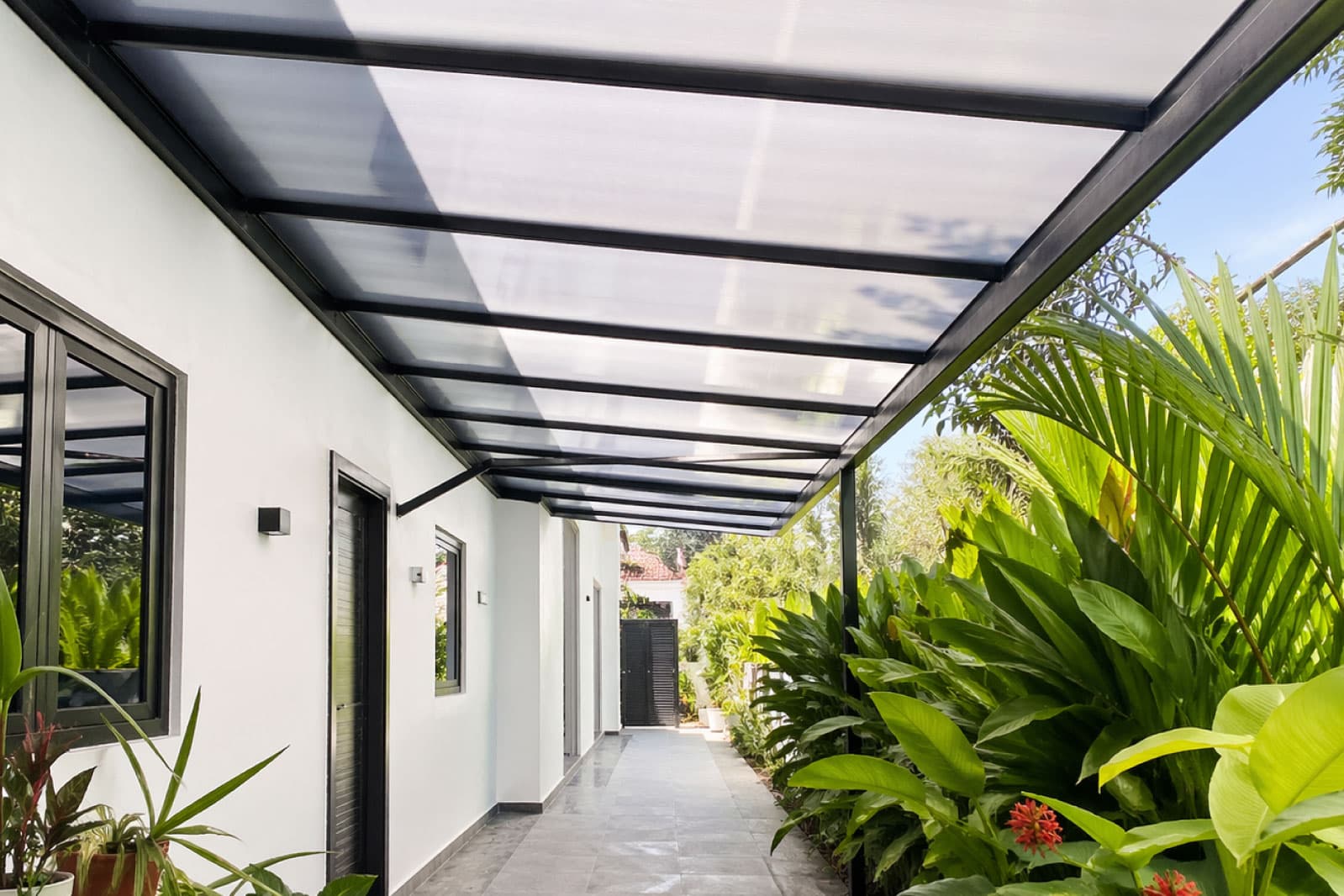
Polycarbonate Roof is chosen for brightness. Done right, it creates a light-filled sheltered space. Done wrong, it turns your balcony into a greenhouse.
Why it helps
- You get natural daylight while still being sheltered from rain.
- Multiwall polycarbonate can reduce heat better than clear solid sheets because of the air channels.
Best for
- Homeowners who do not want the space to feel dark
- Smaller balconies where brightness matters
- Areas that get softer sun (or where heat is not the main issue)
What actually determines comfort
Polycarbonate roofs let in light, which can be great for brightness, but the comfort depends heavily on whether it is clear, tinted, or reflective, whether you choose a solid sheet or a multiwall design, and how much direct sun your unit takes.

Option 3: Glass roofing (premium look, high risk of heat if mis-specified)
Glass Roof looks premium and gives an open sky feel, but it is the easiest material to get wrong in hot climates. The spec matters more than the material.
Why it can help
- Brightness and visual openness is excellent.
- With the right coating or interlayer, heat reduction can improve.
Watch-outs
- Standard glass can allow significant heat gain.
- Poor specs make the space hotter than before, just with a nicer view of your regret.
- Requires strong structure and careful safety considerations.
The underrated heat-reduction tools that are not “material”
Roof material is only half the story. These make the biggest real-world difference.
1) Colour and surface reflectivity
Lighter colours and reflective finishes generally absorb less heat than darker surfaces. That does not replace insulation, but it helps.
2) Ventilation design
Hot air rises. If your roof design traps it, the space will stay warm.
Practical ways to improve it:
- Leave ventilation gaps where appropriate
- Avoid sealing the area like a box unless you have a plan for airflow
- Pair roofing with side shading solutions that can be adjusted, not permanently closed
3) Pairing with side protection (ZipBlind®)
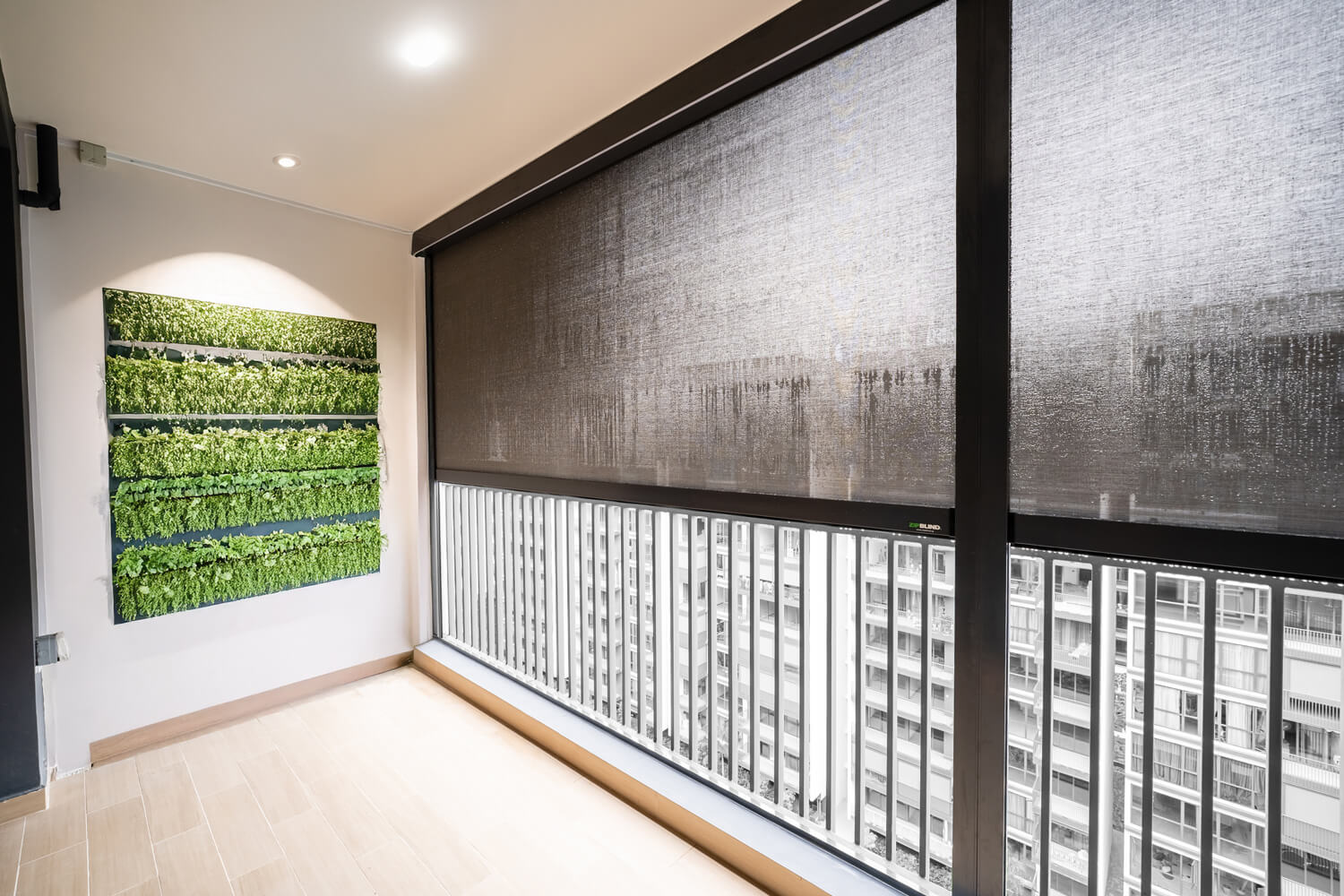
Even a great roof cannot block low-angle glare or sideways sun, especially in the late afternoon. That is why many homeowners pair roofing with ZipBlind® outdoor zip blinds to cover the open sides, control harsh sun angles, and keep the space comfortable and usable throughout the day.

Conclusion: Make the balcony safer, then make it usable
If your outdoor space is currently too hot, installing any roofing solution is one of the highest-impact upgrades you can make. ACP delivers strong shading with a clean finish. Polycarbonate keeps the space bright, but it must be specified correctly to avoid greenhouse heat.
Ready to make your outdoor space cooler and more usable? Speak to ShadeSpace for a site assessment and we’ll recommend the right roofing material for your sun direction, space, and comfort goals. Contact us for more!
Related posts
Enclose Your Balcony with ZipBlind® + Invisible Grilles for Extra Safety
If your balcony is currently a half-used zone for laundry racks, random boxes, and “we will use it o …
5 Reasons ZipBlind® Is the Best Balcony Upgrade for New Homes in Singapore
In the competitive landscape of Singapore’s real estate market, homeowners are constantly looking fo …