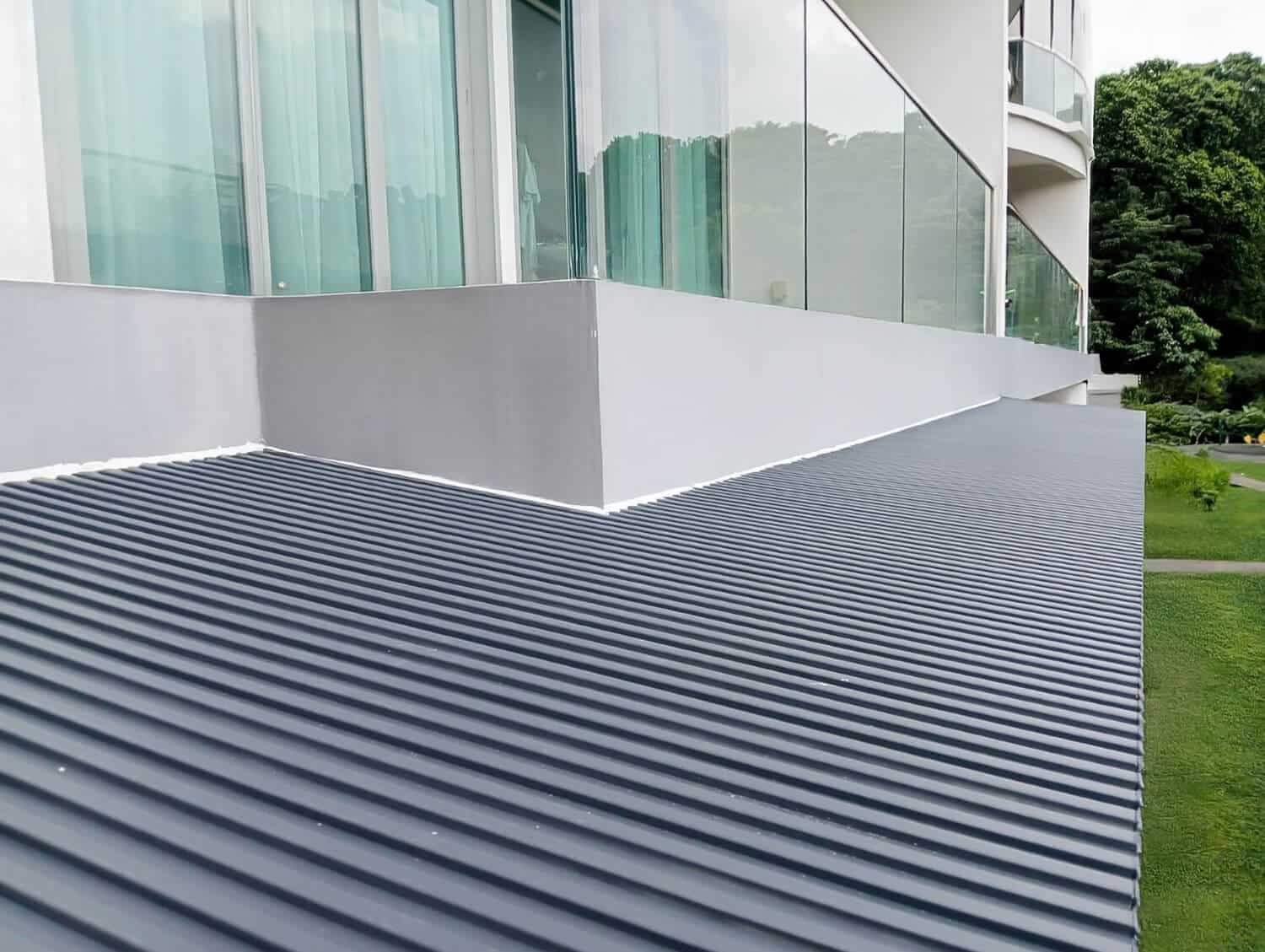
As of mid-2026, the average cost for a full roof replacement on a landed property in Singapore typically ranges from S$15,000 to S$45,000. While a basic refresh or minor repair can start as low as S$8,000, comprehensive replacements for larger Semi-Detached or Bungalow homes often exceed S$60,000, depending on the structural complexity and chosen materials.
Recent price hikes are largely driven by a 12–15% increase in scaffolding and safety compliance costs, alongside higher demand for energy-efficient materials that align with the Singapore Green Plan 2030.
1. Estimated Cost by Property Type
Roof size remains the primary cost driver. In 2026, contractors generally quote based on the “roof footprint,” which includes the pitch and overhangs, rather than just the interior floor area.
| Property Type | Estimated Roof Size (sq. ft.) | Cost Range (S$) |
| Intermediate Terrace | 1,000 – 1,500 | S$15,000 – S$28,000 |
| Corner Terrace / Semi-D | 1,800 – 2,500 | S$25,000 – S$50,000 |
| Detached Bungalow | 3,000 – 5,000+ | S$55,000 – S$100,000+ |
| Good Class Bungalow | 6,000+ | S$120,000+ |
Note: For multi-storey homes (3 storeys or higher), expect an additional S$5,000 to S$8,000 specifically for advanced scaffolding and NEA-mandated safety barriers.
2. Materials Deep-Dive: Costs & Lifespan
Material selection is no longer just about aesthetics; homeowners are increasingly prioritizing passive cooling to combat Singapore’s rising temperatures.
| Material Type | Cost per sq. ft. (S$) | Expected Lifespan | Best For |
| Asphalt Shingles | S$8 – S$12 | 20 – 25 years | Budget-friendly, versatile designs. |
| Metal (Colorbond/Zinc) | S$12 – S$20 | 40 – 50 years | Modern look, high durability, solar-ready. |
| Clay / Concrete Tiles | S$16 – S$28 | 50+ years | Traditional aesthetics, excellent thermal mass. |
| Solar-Integrated Tiles | S$35 – S$60 | 25+ years | Energy generation, high upfront cost. |
| Polycarbonate Roof | S$6 – S$12 | 10 – 15 years | Carporches, backyards, and skylights. |
- Pro-Tip: “Cool” metal roofing and heat-reflective clay tiles can reduce attic temperatures by up to 5°C to 8°C, significantly lowering your monthly air-conditioning bill.
3. Detailed Labor & Service Breakdown
In Singapore, labor and logistical overheads now account for roughly 60% to 65% of the total project cost. This is due to the high cost of skilled specialists and the stringent safety protocols required by the Building and Construction Authority (BCA).
Key Cost Components:
- Labor Rates: Specialist roofers currently charge between S$100 and S$150 per hour.
- Old Roof Removal & Disposal: Tearing down the existing structure and hauling debris to NEA-approved disposal sites typically costs S$2,500 to S$5,000.
- Scaffolding & Safety: This is often the most overlooked cost. A standard 2-storey terrace setup ranges from S$3,000 to S$4,500.
- Waterproofing & Underlayment: Critical for Singapore’s tropical rain. High-grade self-adhesive membranes cost roughly S$5 to S$9 per sq. ft. installed.
4. Regulatory & Professional Fees
If your roof replacement involves structural changes (such as changing the pitch or adding a mezzanine), you must factor in professional fees that were not typically included in older guides.
- BCA Plan Submission Fees: Approximately S$500 for residential works under 3,000 sqm.
- Qualified Person (QP) Fees: If structural plans are required, a Professional Engineer (PE) or Architect may charge between S$2,500 and S$6,000 for endorsement and supervision.
- NEA Paint Regulations: As of January 2026, all interior coatings used during attic/roof renovations must be formaldehyde-free. Ensure your contractor uses certified “Green Label” paints to avoid compliance issues.
5. Structural Repairs & Hidden Costs
During the “tear-off” phase, contractors frequently discover underlying issues. Budget an additional 10% contingency fund for:
- Rafter Replacement: S$500 – S$1,200 per timber beam if rot is found.
- Upgraded Insulation: S$4 – S$7 per sq. ft. for high-density rockwool or foil-backed bubbles.
- Flashing & Valley Repairs: Critical for preventing leaks at the intersections of your roof.
